
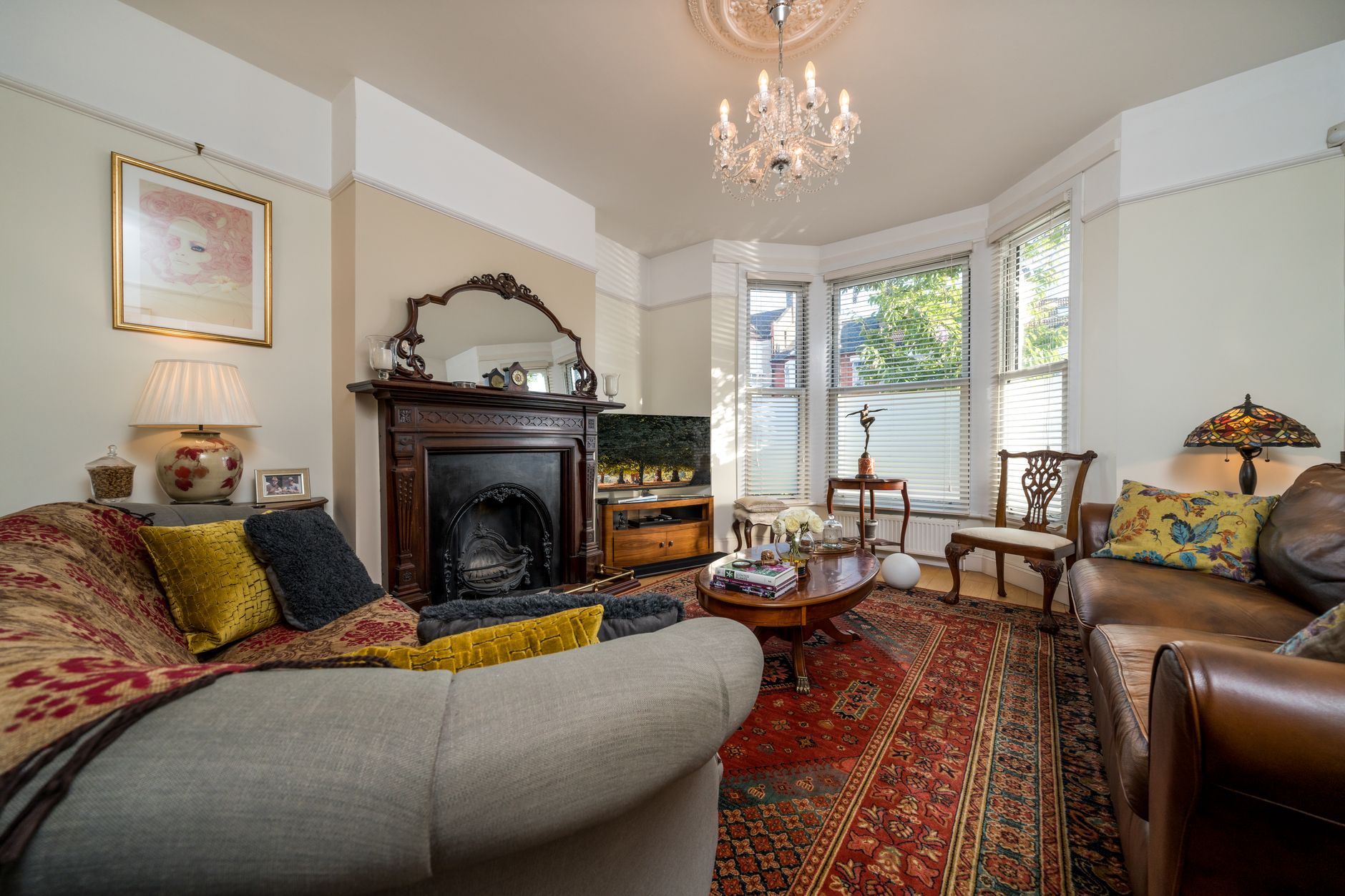
New stone over a damp chimney breast stains within a winter
Ask About Fireplace Remodel
Say where the water, rust or damage shows and how long it has been there. The office calls back to set a time.
Scope of the job
New stone or tile over a chimney that still takes in water will show it within a winter: white bloom in the grout, a stain at the mantel, loose tiles. We check the crown, cap and roof joint first, then build the surround, hearth and mantel to the clearances the fireplace needs. The remodel is priced in writing once the plan and materials are agreed.
Why we start a remodel on the roof
People plan a fireplace remodel around the face: new tile, a stone surround, a clean mantel, a raised hearth. What often sends them to us in Bellflower is the old face looking tired, and the reason it looks tired is frequently water. White crust on the brick, paint that bubbles on the chimney breast, a mantel with a dark stain at one end and grout that keeps cracking are all signs that the masonry behind is wet. Putting new stone or tile over that brick does not stop it. The salts carried by the water push through the new face and leave the same white marks, and adhesive lets go on a surface that never dries. So before we draw anything, we look at the chimney from top to bottom: cap, crown, flashing, brick above the roof and the flue. If water is getting in, we fix that first and give the wall time to dry.
With the chimney sound, the remodel itself can go ahead. We cover surrounds in tile, stone or plaster, new hearths, mantels, and changes to the firebox or opening such as glass doors or a smaller opening. Some remodels also change the fuel, with a gas log set or an insert in place of an open wood fire, and those change what the chimney needs. Every design has to respect the clearances in NFPA 211 between the opening and anything that can burn, including the mantel and wood trim, and we set those out in the plan. The remodel is quoted in writing after we have checked the chimney and agreed on materials, since the price rests almost entirely on what you choose for the face and hearth. Water repairs found on the chimney are listed on their own lines, so you can see what the remodel costs and what the chimney needs regardless of how the face ends up looking.
How a remodel runs from start to finish
The first visit is a look at the chimney and the fireplace together, with measurements of the opening, hearth and wall. Then you get a written plan: any water repairs needed first, the remodel itself, the materials, the clearances, and the order of work. Demolition comes next. Old tile or stone comes off, and sometimes the brick under it shows more than we expected, such as a cracked lintel over the opening or hollow joints that need repointing. If so, we stop, show you, and price the extra item before going on. The new face goes on over sound, dry masonry, and the hearth is set to the size the opening needs. We protect floors and furniture along the way and clean up at the end of each day. At the end, you get photos of the masonry as it was before the new face went on, which is a useful record if you ever sell the house or need to open the wall again.
Many houses around Lakewood and Carson have the same brick fireplace with a plain hearth, built in the years after the war. Those are good candidates for a remodel, but they are also old enough that the chimney above has seen decades of rain and at least two large quakes. Checking it first costs little and avoids the case where a fine new surround stains or cracks in its first winter. When you fill in the form, describe the fireplace you have now, what you have in mind and anything you have noticed on the chimney breast, such as stains or flaking paint. We plan the first visit around both the remodel and the chimney. Some owners come in wanting a full rebuild of the face and leave with a simpler plan, once they see that most of the tired look came from water marks that stop once the leak above is closed.
Four Habits on Every Hammond Chimney Solutions Job
Trace First
The stain is followed to its entry point before we price
Active Drips Up Front
Wet ceilings move ahead of routine bookings
Price on Paper
A written figure before any work starts
Hose Tested
Water run over the repair before we pack up
Fireplace Remodel in our focus cities
Bellflower, Lakewood, Carson and our other focus city each get a page on how roofs, brick age and winter rain there change this job, with the ZIP codes we cover.
CA
Fireplace Remodel in Bellflower
The trail often begins as a tea-colored ring beside a 1950s brick or block stack, long since given gas logs. Gas logs never kept a drop out. Half of the city's houses predate 1966, so we climb straight to the crown and flashing.
View local serviceCA
Fireplace Remodel in Paramount
Renters fill most households here, so a musty bedroom wall is often reported by someone who has never seen the roof. We start at that wall, follow the damp upward and name the flashing seam or cap that let water through.
View local serviceCA
Fireplace Remodel in Lakewood
Some tract models never got a fireplace. Where one exists, its brick or block stack dates to the original build, and half the houses here predate 1957. A brown ring on the ceiling sends us up to the crown and flashing, the two places age opens first.
View local serviceCA
Fireplace Remodel in Carson
With 74% of homes owner-occupied, the person chasing a leak usually lives under it. On a post-war brick chimney fitted with gas logs, we skip the firebox and go to the crown, cap and flashing, because that is where rain gets inside.
View local serviceMore chimney and fireplace services
Chimney Sweep
Creosote and soot hold moisture against the flue walls, so a sweep comes before any hunt for a leak.
Read moreChimney Inspection
A Level 1 visual check for the marks water leaves: rust on the damper, bloom on brick, cracks in the crown.
Read moreChimney Repair
Water damage rarely stays in one spot; we repair the cracked tile, open joint or failed seal where it began.
Read moreFireplace Inspection
From the room side we check firebox, damper and hearth for rust, damp, crumbling joints and heat damage.
Read moreFireplace Repair
Rusted dampers, crumbling firebrick and a sagging lintel are often the downstream cost of a leak; we put them right.
Read moreChimney Level 2 Inspection
A camera recording of the full flue, for leaks with no visible cause, a condo or home sale, or after a quake.
Read moreChimney Cap Installation
An open flue takes in rain with every storm; a stainless cap measured to the tile keeps it out, quoted on site. A wide crown or a copper cap changes the price.
Read moreChimney Flashing Repair
Most ceiling stains beside a chimney start at the metal where roof meets brick; we replace and reseal that joint.
Read moreChimney Masonry Repair
Spalling faces and sandy mortar let rain soak deep into a chimney; we cut out the damage and repoint to match.
Read moreChimney Rebuilds
When years of soaking have loosened the brick above the roof, a partial or full rebuild is the lasting fix.
Read moreFireplace Cleaning
A damp, sour smell at the hearth usually means wet ash and creosote; we clear the firebox and find the moisture.
Read moreGas Fireplace Cleaning
Rust flakes, lint and shifted logs upset a gas fire; we clean the burner, reset the logs and check the vent.
Read moreGas Fireplace Repair
We test the pilot, igniter and valve in turn and replace whichever part the water got to first.
Read moreFireplace Inserts
An insert on its own sealed liner keeps damp flue air out of the room; gas inserts run $2,950 to $5,900 installed.
Read morePellet Stove Repair
Pellets swell and jam when moisture gets in; we clear the feed, clean the vent and test the fans and igniter.
Read moreWood Stove Repair
Rust on the stovetop, a drip at the flue collar or a door that leaks smoke: we repair the stove and the pipe above.
Read moreGas Logs
Rather than burn wood in a damp firebox, many owners switch to vented gas logs; we fit them and check the flue.
Read moreChimney Seismic Retrofit
Quake cracks open paths for rain into old brick chimneys; bracing and repair keep the stack together and dry.
Read moreChimney Crown Repair
A cracked crown lets rain straight into the brick below; we seal small cracks and recast crowns past saving.
Read moreDryer Vent Cleaning
Lint packed in a dryer duct traps damp air in the wall; we clear the run and check the outside hood.
Read moreChimney Liner Installation
Cracked clay tile lets wet flue gas soak into the brick; a new stainless liner seals the flue from top to bottom.
Read moreChimney Leak Repair
We follow a leak from the stain inside back to the crown, cap, roof joint or mortar that lets the water in.
Read moreChimney Waterproofing
Once the brick and joints are sound, a vapor-open repellent cuts how much rain the chimney soaks up each winter.
Read moreChimney Damper Repair
Rain down an open flue rusts damper plates until they seize; we free or replace them, or fit a top-sealing damper.
Read moreChimney Chase Cover
Framed chimneys rely on a metal top; once it rusts or holds a puddle, rain reaches the framing below.
Read more